
Motorcycle crashes can be especially devastating. Riders are far more exposed than drivers in a car, which often results in…
Child Injured at School in Washington? What Parents Should Know
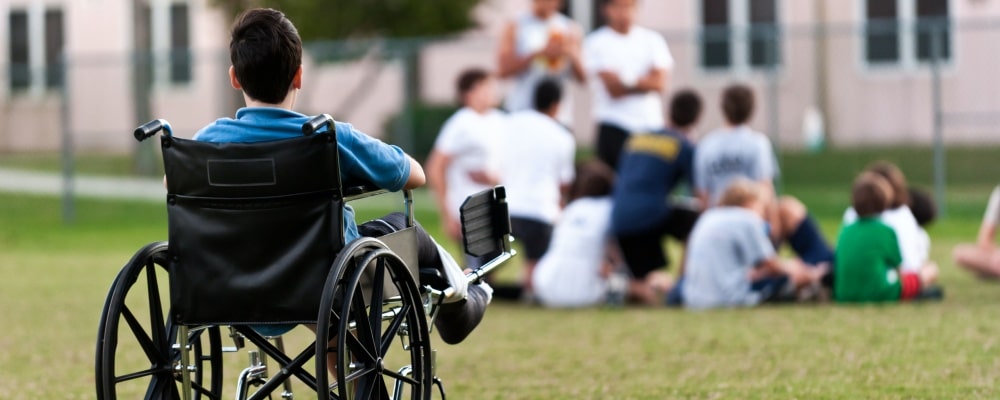
SUMMARY: If your child was hurt at school in Washington, the school may be responsible when it failed to take reasonable steps to prevent a foreseeable injury, such as poor supervision, unsafe equipment, or ignoring a known danger. This article explains what to do right after a school injury, how Washington courts decide whether a school is liable, and the deadlines that apply, including the claim you must file before suing a public school district.
What should I do if my child was injured at school?
The first hours and days after a school injury shape both your child’s recovery and any later claim. These steps protect both.
- Get medical care first. Have a doctor check any injury that isn’t clearly minor, and every head injury. Keep all records and bills.
- Ask for the incident report. Request a copy of the school’s accident or incident report, and note which staff members responded.
- Write down what happened. While it’s fresh, record your child’s account, the date, time, and place, who was supervising, and any witnesses.
- Take photos. Photograph the injury as it heals and, if you can, the place it happened: broken equipment, a wet floor, a hard playground surface.
- Save every message. Keep emails, texts, and letters from teachers, coaches, the nurse, and the district.
- Be careful what you sign. Don’t sign a release or give a recorded statement to an insurance adjuster before getting advice.
- Talk to a school injury attorney early. Claims against public school districts have extra filing steps, and evidence like video footage may not be kept for long.
If your child has been injured at school it is critical that you consult with an experienced school injury attorney to discuss your options. Every case is unique and requires an analysis of the facts. With that, the Washington Supreme Court has stated time and time again that schools have a solemn duty of care for its students. Washington Law Center has represented children that have suffered a wide array of injuries while attending school.
Common types of school injuries
Washington Law Center has represented children hurt in a wide range of school settings. Common cases include:
- Playground falls and injuries from broken or poorly placed equipment
- Sports and PE injuries, including concussions
- Injuries caused by other students, especially after warning signs were ignored
- Slip-and-falls and building hazards such as wet floors, damaged stairs, or poor lighting
- Injuries in shop class, science labs, or from classroom equipment
- Field trip and school bus injuries
- Delayed or inadequate response to a medical emergency, such as an allergic reaction or asthma attack
If your child was abused by a teacher, coach, or staff member, see our Student Sexual Abuse page.
When is a school responsible for a student’s injury in Washington?
Washington courts have long recognized a special relationship between schools and students. Because attendance is required, the school stands in for the parent while a child is in its care (McLeod v. Grant County School District No. 128, 1953). The district must take precautions against dangers that can reasonably be anticipated (Briscoe v. School District No. 123, 1949).
The standard is reasonable care: what a reasonably careful person would do in the same situation (J.N. v. Bellingham School District No. 501, 1994). In 2018, the Washington Supreme Court confirmed this is an ordinary duty of care, not a heightened one (Hendrickson v. Moses Lake School District).
In practice, a school may be responsible when it:
- Failed to supervise students adequately for their age and the activity
- Failed to fix, block off, or warn about a hazard on school grounds
- Ignored a known risk, such as prior threats from another student
- Didn’t follow safety rules or its own policies
- Responded too slowly or improperly to an injury or medical emergency
The key question: Was the injury foreseeable?
Schools are not responsible for every accident. A school is liable only for risks it knew about, or reasonably should have known about (Peck v. Siau, 1992). Courts ask whether the harm fell within the general field of danger the school should have guarded against (Maltman v. Sauer, 1975).
The exact chain of events doesn’t need to be predictable. If the general danger was foreseeable, the school can be liable even when the specific way the injury happened was unusual (McLeod, 1953).
For example, a school that knows a climbing structure is broken but leaves it open may be responsible whether a child falls from it or is struck by a loose part. The same rule applies to injuries caused by other students: the school is liable only if it knew, or should have known, of the risk.
What if my child was partly at fault?
Your child can still recover compensation. Washington uses comparative fault, so an award is reduced by the share of fault assigned to the injured person rather than barred entirely (RCW 4.22.005). The Hendrickson decision confirmed a school district can raise this defense.
Concussions and school sports: The Lystedt Law
Washington’s Zackery Lystedt Law (RCW 28A.600.190), passed in 2009, sets three rules for youth athletes:
- Annual sign-off: The athlete and a parent must sign a concussion information sheet each year before practice or play.
- Removal from play: An athlete suspected of a concussion must be taken out of the practice or game.
- Written clearance: The athlete can’t return until a licensed health care provider trained in concussions gives written clearance.
The law doesn’t create its own lawsuit. But when a school or coach violates it, a court can treat that as evidence of negligence (Swank v. Valley Christian School).
How long do I have to file a school injury claim in Washington?
Deadlines depend on who is filing and whether the school is public or private.
- Your child’s own claim: Usually 3 years, but the clock is paused until your child turns 18, so the deadline is often their 21st birthday (RCW 4.16.190, RCW 4.16.080).
- A parent’s own claim: For losses like medical bills you paid or time off work, usually 3 years from the date of the injury, with no pause (Court of Appeals summary).
- Claims against a public school district: Before suing, you must file a standard tort claim form with the district’s claims agent and wait 60 days. The deadline is paused during that wait (RCW 4.96.020).
- Claims against a private school: No government claim form is required, and ordinary negligence deadlines apply.
The public school claim form asks for a description of what happened, the injuries, the time and place, the people involved, and the amount of damages claimed. Even when a deadline is years away, acting early matters: witnesses forget and records get discarded.
If the incident is related to sexual misconduct, different deadlines apply for the statute of limitations in Washington.
What compensation can my family recover?
Depending on the injury, compensation may cover:
- Past and future medical care, including surgery, therapy, and counseling
- Pain, suffering, and emotional distress
- Lasting effects such as disability, scarring, or a spinal cord injury
- Parents’ own losses, such as medical bills they paid and time missed from work
Experienced School Injury Attorneys in Washington
Our firm and attorneys have represented children that have been bullied, been injured by teachers, by equipment, or participating in a variety of school based activities. If your child has been injured at school, the attorneys at Washington Law Center will provide you with a free, no obligation consultation regarding your claim. We will take time to understand your unique circumstances while giving you a professional interpretation of how legal protections apply to you.
Complimentary Case Review with an Injury Attorney
The experienced trial attorneys of Washington Law Center can help! Contact us today to ensure you are properly informed and prepared for your lawsuit.
Frequently Asked Questions Related To School Injuries
Yes, if the school failed to use reasonable care and that failure caused a foreseeable injury. Schools are not responsible for every accident, so the facts matter. Common examples are poor supervision, unsafe equipment, and ignored warning signs.
Yes. Washington school districts can be held liable for negligence like a private party. You must first file a standard tort claim form with the district’s claims agent and wait 60 days before filing a lawsuit.
A child’s own claim usually has three years, with the clock paused until age 18. A parent’s claim for their own losses usually runs three years from the date of the injury. Talk to an attorney early, because evidence can disappear quickly.
It can be. The school is responsible if it knew, or reasonably should have known, that the other student posed a risk and failed to take reasonable steps to prevent harm.
Schools must follow Washington’s Lystedt Law on concussions: remove a player suspected of a concussion and require written medical clearance before return. Sports injuries can also involve unsafe equipment, poor coaching, or inadequate supervision.
Your family may still recover compensation. Washington’s comparative fault rule reduces an award by the injured person’s share of fault rather than barring it.
At Washington Law Center, the consultation is free and you pay nothing unless we win your case.
ABOUT THE AUTHOR:
Ashton Dennis
Ashton Dennis is a litigation and trial attorney at Washington Law Center focused on representing individuals and families who have suffered a serious personal injury or wrongful death. He was named one of the “Top 40 Under 40” by the National Trial Lawyers of Washington State and one of the “Premier 100” trial attorneys by the American Academy of Trial Lawyers in Washington. Click here to learn more about Ashton.

Related Posts

Comments (0)